Burying JFK
Click here to visit the JFK photo gallery
Friday, November 22, 1963
When the phone rang I was in my Pentagon office fingering a colonel’s prostate, an unpleasant task all around, but a necessity for his annual physical exam. I shucked the glove and answered the phone—nobody but Marianne would be calling on that line. Sure enough, it was her. She’d seen on TV that shots had been fired at President Kennedy during his trip to Dallas. I scoffed at the idea. The line went dead in mid-sentence. Soon the muffled thwack of helicopter rotors signaled urgency and bemedaled officers rushed down the halls. Something was up. The clinic commanding officer canceled all appointments and told us to stand by for further orders. We sat in the waiting room watching TV like everyone else.
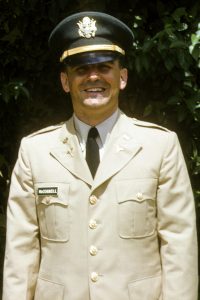
At the time I was in the US Army as a General Medical Officer in the Pentagon Dispensary (clinic). Physicians and other health professionals were subject to the draft necessitated by the Vietnam War. No draft lottery for us. Our only choice was to serve immediately after internship or after getting specialty training as a resident in surgery, pediatrics, or whatever. I chose sooner rather than later—after interning I was broke and had a wife and child to support and an Army Captain’s salary sounded good. Don Payne, a good friend, and medical school classmate made the same decision. We agreed to select Washington, DC as our first choice as a place to serve.
I was assigned to the Pentagon Clinic, Don lucked out with a high profile, cushy job in the HQ of the Military District of Washington, which dealt with military aspects surrounding ceremonies, visiting dignitaries, funerals, and so on. Don mixed with generals, admirals, ambassadors, heads of state, and other swells. It was typical Don—charming and persuasive, at the top of his game as long as it wasn’t academics. My job was deadly dull: officer annual physicals, headaches, hemorrhoids, hernias, and so on.
I asked Don how he managed to get such a good job. He just gave me his usual cat-that-ate-the-canary smile.
Seeing I was bored and had time, he said he’d assign me as the doc for some of the military support staff that went to the White House and other sites to be ready if someone had a medical problem.
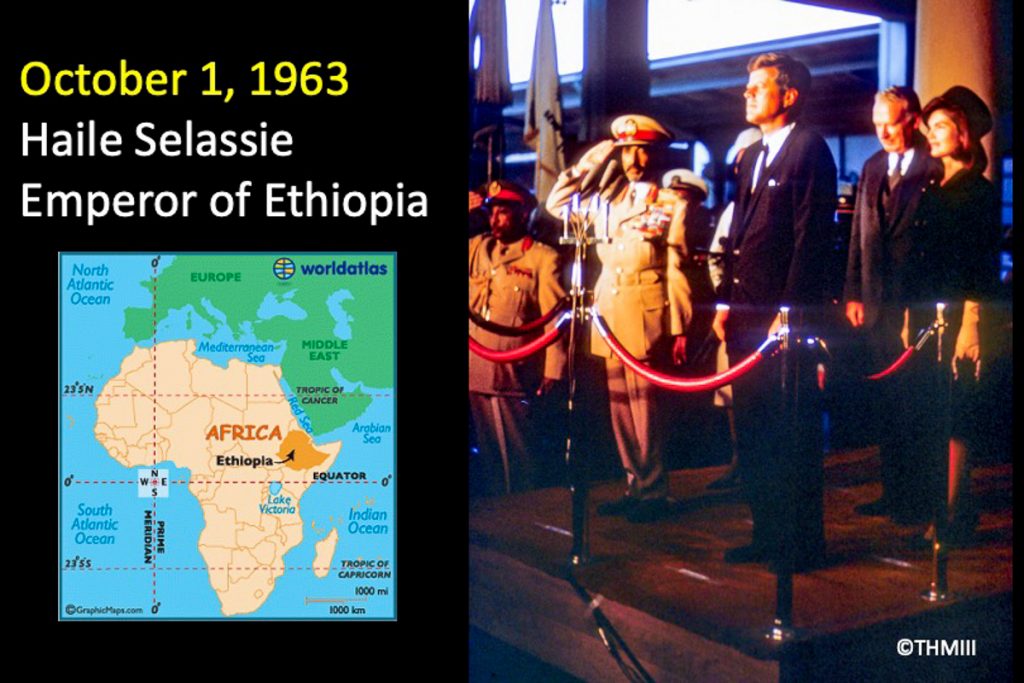
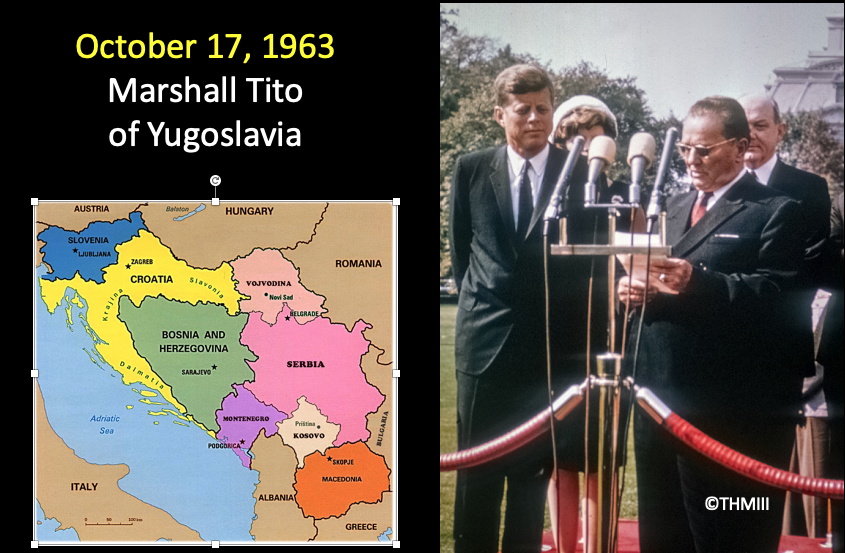
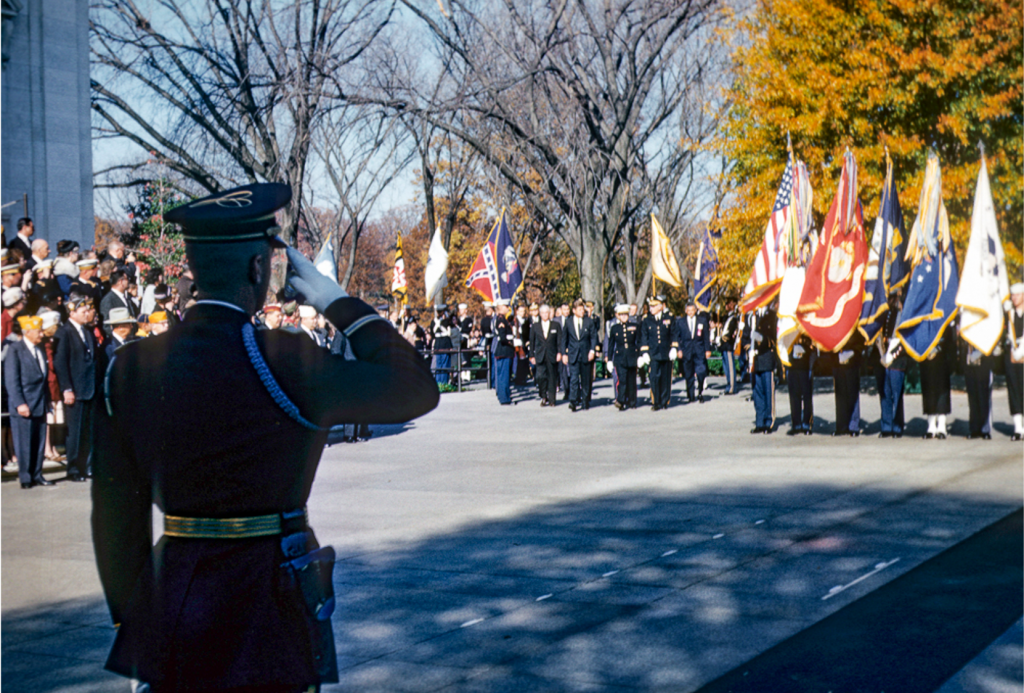
Within a few days, I got orders to proceed to the White House South Lawn for a ceremony welcoming Emperor Haile Selassie of Ethiopia. I never go anywhere without my camera, but I worried that for such a high-profile visit someone (the Commander-in-Chief!) might object. But I took it anyway and got a shot of Selassie, JFK, and Jackie. He’s saluting the flag off camera left, but he seems to be looking directly at me. A few weeks Don assigned me to be the medic as Kennedy welcomed Marshal Tito of Yugoslavia. As usual, I took my camera and took some not-so-discrete shots. I worried someone would object but no one seemed to care. It was thrilling to be so close to the action. Knowing I liked it Don arranged for me to be in the support detail for Kennedy’s Veterans Day visit to the Tomb of the Unknowns at Arlington National Cemetery eleven days before the assassination.
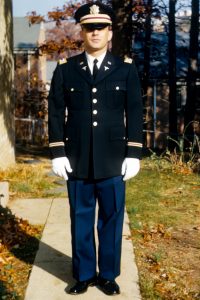
Before nightfall on that terrible day, Don called to say he’d assigned me to the medical detail for the President’s funeral. Dress blue uniform. Meet at the Pentagon motor pool tomorrow at noon.
Saturday, November 23
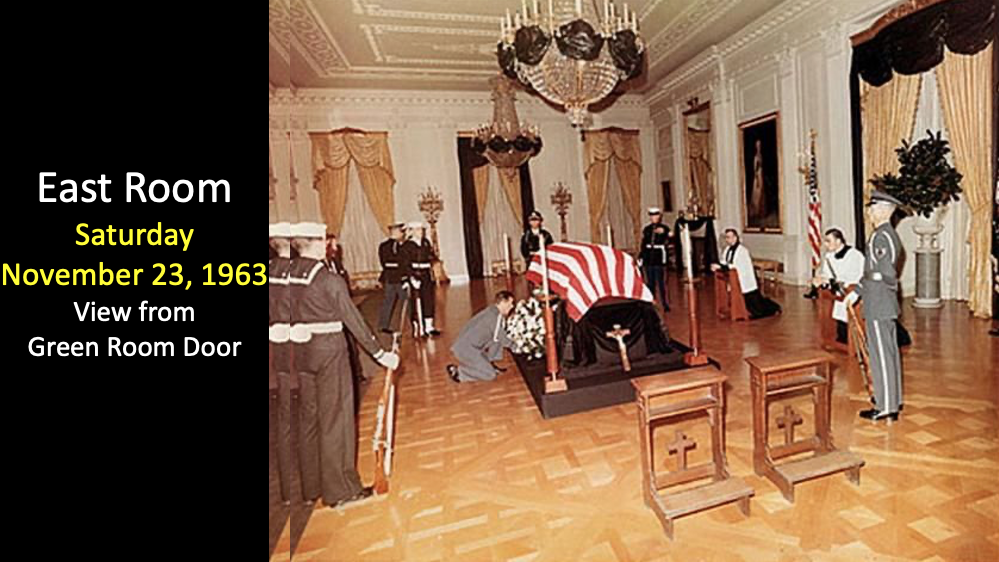
Midmorning the next day a military police car with four motorcycle outriders drove Don and me to the White House North Portico. The car doors were opened by the Marine guards on duty, snappy salutes exchanged, and we were shown into the entrance hall. Our day there was a memorable experience in large part because things were so unstructured; we did as we pleased. But I did not take my camera. It didn’t seem right; Mother would not approve.
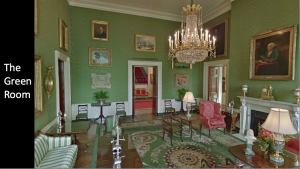
I was assigned to stand at the door joining the Green Room and the East assembled in the Green Room before entering the East Room where the casket was posed. More public figures than I can name passed within arm’s reach. Especially memorable were Bobby Kennedy and brother-in-law Sargent Shriver deep in conversation about what kind of memorial should be built.
After the crowd was gone we took a break in the State Dining Room. It was arranged buffet style with white tablecloths and White House dinnerware. We had tea and finger sandwiches served by a butler in formal wear who had served every president since Herbert Hoover. I don’t recall details of the silver or china but it crossed my mind that almost anything there would make a nice memento, but visions of courts-martial squelched the idea. And Mother would have been horrified.
After our snack, Don went back to the East Room. The crowd had thinned, and I wasn’t needed, so I wandered about. It was amazing—nobody was home. Think about it. Kennedy was dead and Lyndon Johnson, not wanting to appear too eager to seize the levers of power, decided to delay moving in. The Grand Stairway to the upper floor beckoned. I could sneak into the Lincoln Bedroom and stretch out for a moment. A couple of steps brought me to the first landing. I paused, looking up and listening. Silence. I climbed a few more steps, straining to hear anything that might tell me if someone was up there. I leaned on the railing, twisting to see the hallway at the top of the stair. Nothing. Courage failed. It was disrespectful— Mother would not approve. I retreated and went down a floor to visit the West Wing.
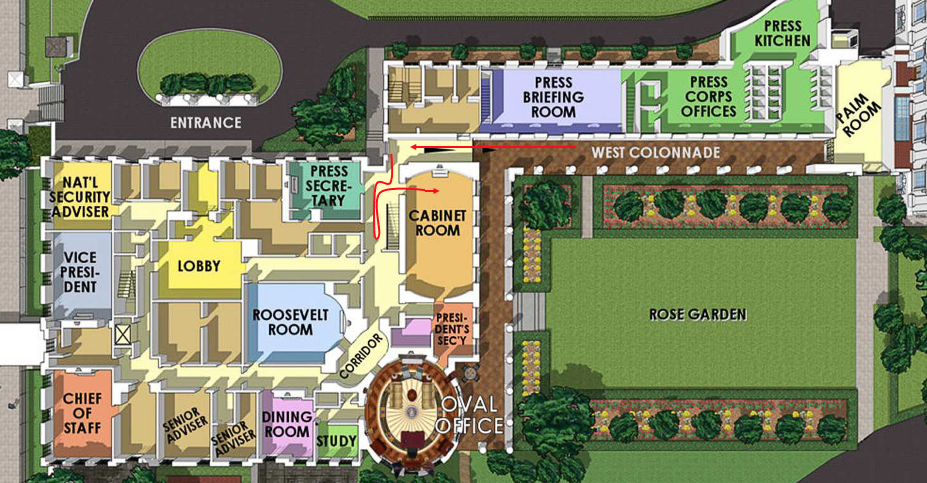
I walked down the West Colonnade, striding deliberately to mimic confidence and purpose. I passed the Rose Garden on my left, where I’d been before when Marshall Tito had visited. With every step down the colonnade, I expected a Secret Service agent to leap from behind a curtain demanding to know what business I had there. I entered the door at the far end of the Colonnade and found myself in a short hall. On my left, the door into the Cabinet Room stood open. At the end, a second, short hallway to the left led directly to the Oval Office. I turned into it and discovered that if I stood to the far right against the wall I could see a sliver of the famous blue carpet Kennedy had installed. Thinking a souvenir would be nice, I could say I had once stood in that hallowed room. I took a few steps. I couldn’t do it. To use a national tragedy as an opportunity for voyeurism was shameful. Mother would not approve. Don, had he been with me, would have marched into the Oval Office and he wouldn’t have settled for an ashtray.
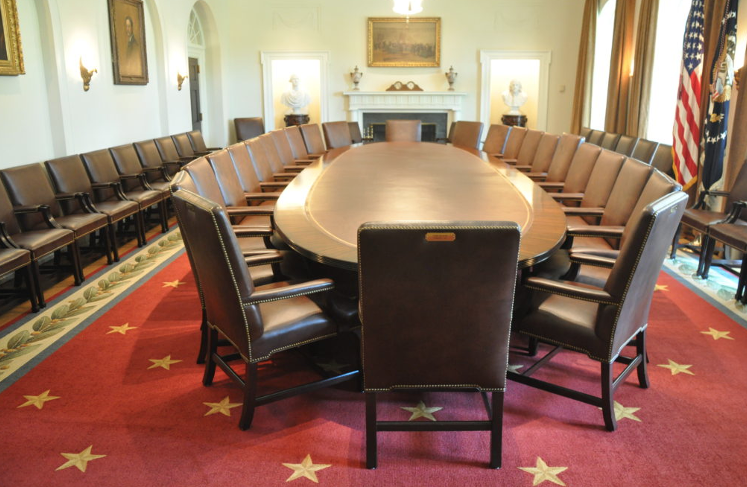
I retreated and edged into the Cabinet Room through the wide-open door. I admired the huge table and big chairs. At the end of the room was another door to the Oval Office. Tempted again, I took a few steps, but couldn’t do it.
I returned to the East Room and conferred with Don. It was time to go home. But exactly how do you get home from the White House? Our orders said nothing. Calling a taxi didn’t seem right. While Don and I discussed the problem, Kennedy’s Chief of Protocol, Angier Biddle Duke and a USN Admiral walked by discussing the Ambassador’s need for a limousine. Don, clever as ever, suggested we follow the Ambassador. Soon we were in a queue to use a very important telephone. Everyone in line was a general, admiral, or ambassador, but we blended in with our military dress uniforms. When Mr. Duke’s turn came he said, “This is Ambassador Duke. I need a car at the North Portico.” Following his lead, Don took the phone and said, “This is Captain Payne; Captain McConnell and I need a car at the North Portico.” He didn’t say we were lowly Army Captains, not near the rank of a US Navy Captain.
We went to the North Portico and shortly a military police car rolled up and our names were called. Guards rushed to open the doors, salutes were exchanged, and away we went.
Sunday, November 24
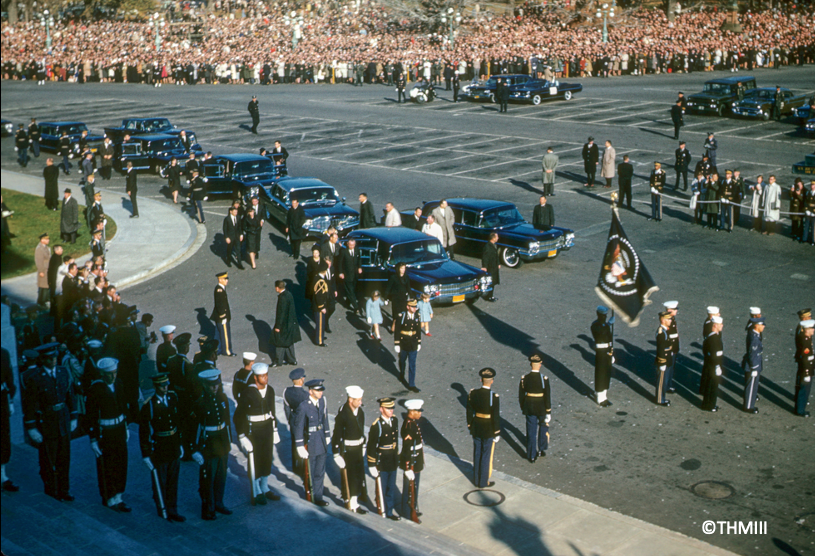
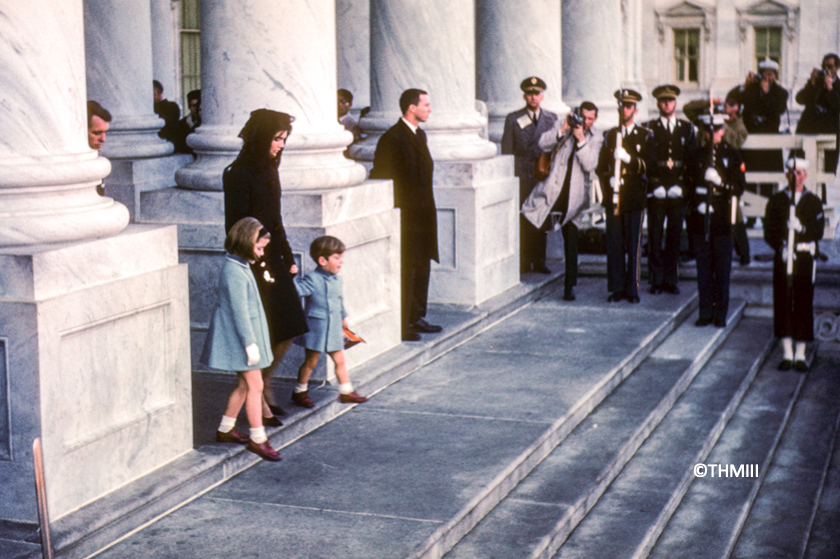
The next day I was posted to the Capitol, where JFK was to lie in state overnight in the Rotunda. My task was much like before—be available to offer medical assistance to anyone in the cortege or crowd.
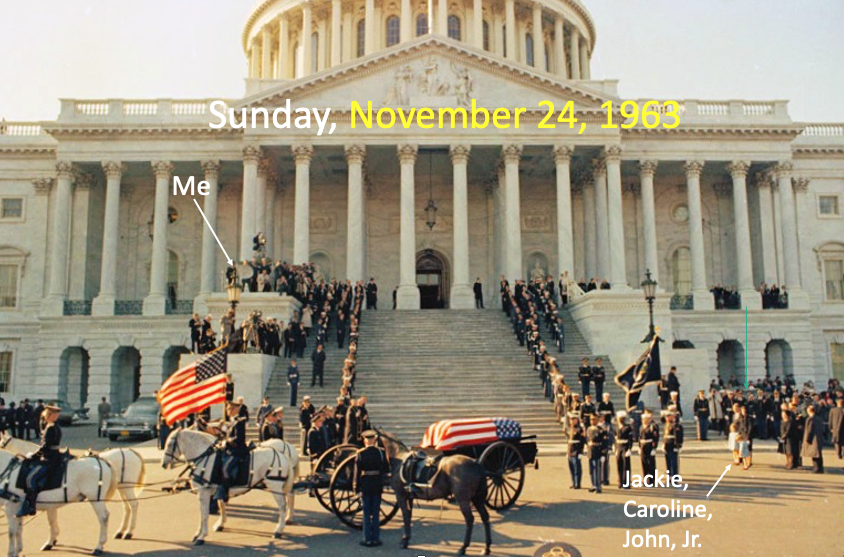
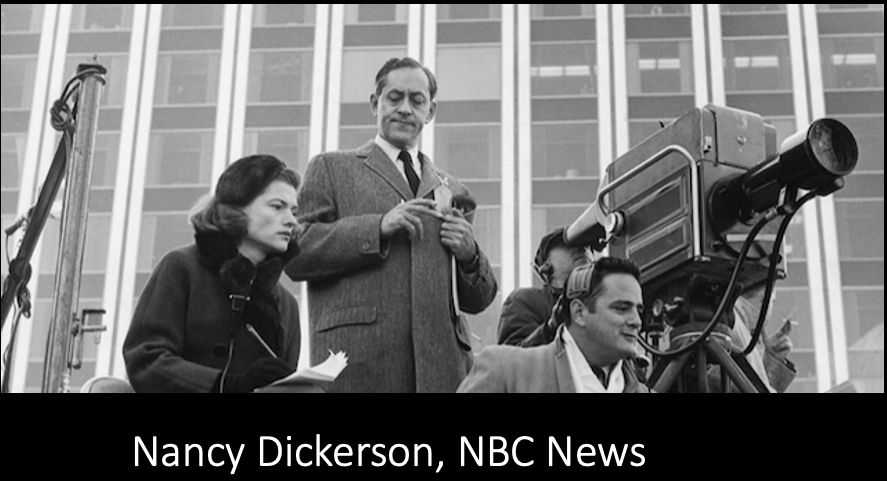
My duty station was at the top of the steps on the east facade. It afforded a grand view of the big parking lot (now replaced by the Visitor Center), the Supreme Court, and the Library of Congress. I stood near an NBC camera crew and the late Nancy Dickerson of NBC News, who had dated Kennedy when he was a Senator. We chatted for a while and my East Texas twang led her to ask me where I was from. “Dallas,” I answered.
Eyes widening with shock, in an instant I became the object of sharp questioning by a professional interviewer. I stammered nervously, doing my best to answer questions framed in a way that suggested Texas was a primitive outer province peopled by Neanderthals with guns. In a few minutes, she put her headphones back on, and returned her attention to the vast crowd. We stood together quietly for a while taking in the scene waiting for the cortege to appear.
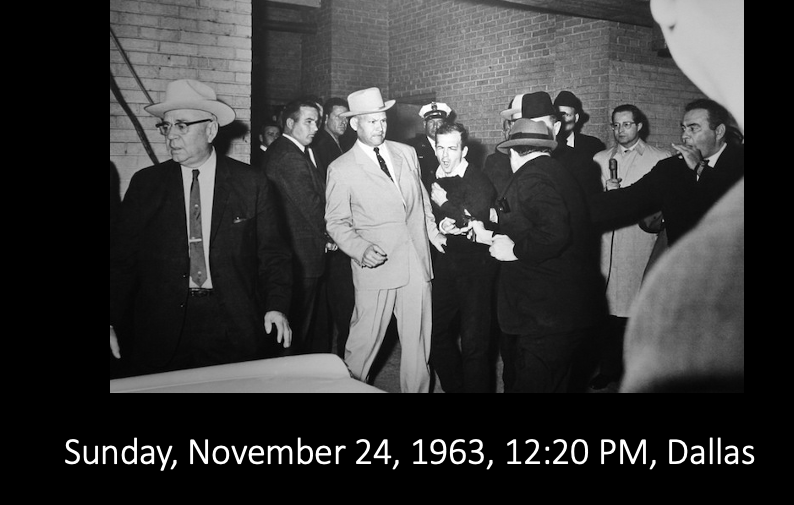
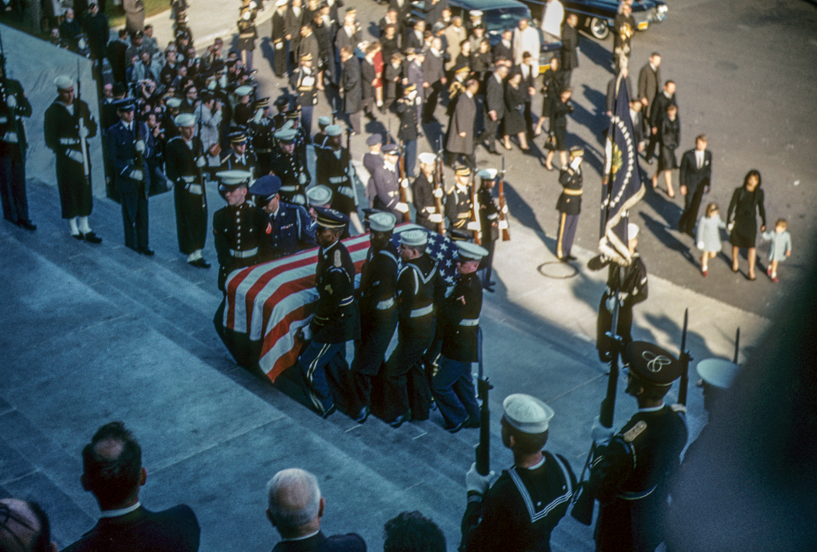
Suddenly she jerked as if stung by an insect and clapped her hands on her headphones, pressing them tightly to her ears, looking down and shaking her head. Then she ripped them off and turned, glaring at me angrily. I recall her words exactly: “What kind of people are you down there in Dallas!” It wasn’t a question, but a judgment—she had just learned from NBC that Jack Ruby had shot Lee Harvey Oswald, in the basement of the Dallas jail no less. It ran through my mind that the shooting was in keeping with the image of Texas as a place where people settled scores by dueling it out on the sidewalks. Even knowing Texas as well as I did, it was impossible to make sense of it. I began to wonder if a conspiracy was unfolding. The Russians. Maybe Castro. Soon, however, the cortege crept into view. A hush fell over the huge crowd. The silence was complete but for the clip-clop of horses and the haunting tattoo of drums.
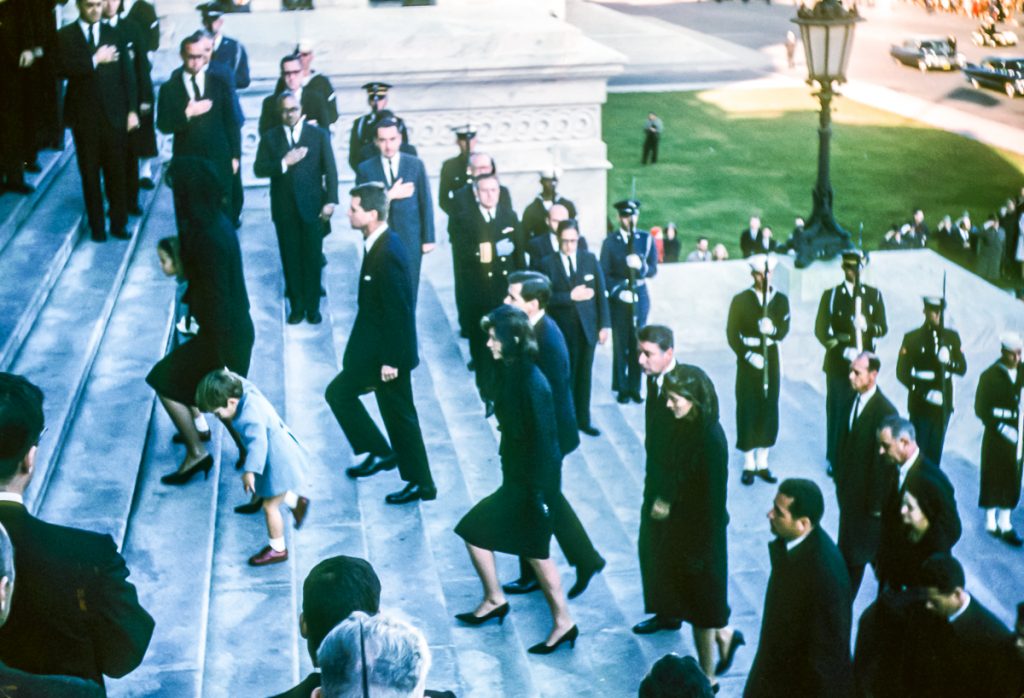
I stood rooted in place, camera in hand, shooting as fast as I could as the family and high officials followed the casket up the big steps and it was it in the Rotunda for public viewing.
After the funeral party departed I went home to get some rest. I was due to return for a late-night shift in the Rotunda as the throng passed through to pay their respects.
I called the Pentagon motor pool to requisition a car for my trip back to the Capitol. At the Pentagon, I was met by a military police detail that included a driver and another soldier, and four motorcycle outriders. Off we went, lights flashing, driving east along Independence Avenue, the National Mall, and Washington Monument to our left. The motorcycles sped ahead, stopping traffic at intersections as we sped by. At the Capitol, we found an immense, quiet crowd gathered to pay their last respects. Police funneled the throng eight-abreast into a thick line that inched across the big parking lot, up the steps where I’d been hours earlier, into the Rotunda, and out the National Mall (west) side. The driver’s radio crackled with snatches of conversation directing us to enter the parking lot by the south gate. As we inched along the crowd pressed against the windows, cameras flashing as if a rock star was inside. The gates swung open to reveal the lot empty but for the line of visitors.
Then it hit me: I didn’t know where to go. After such a gaudy entrance, I couldn’t just get out of the car and get in line. I told the driver to drive to a door I could see at the base of the steps. Maybe it would lead inside. I emerged to salutes and camera flashes and tried to look confident as I scurried under the steps, mercifully out of sight. After the military police drove away, I tried the door and was relieved that it led inside.
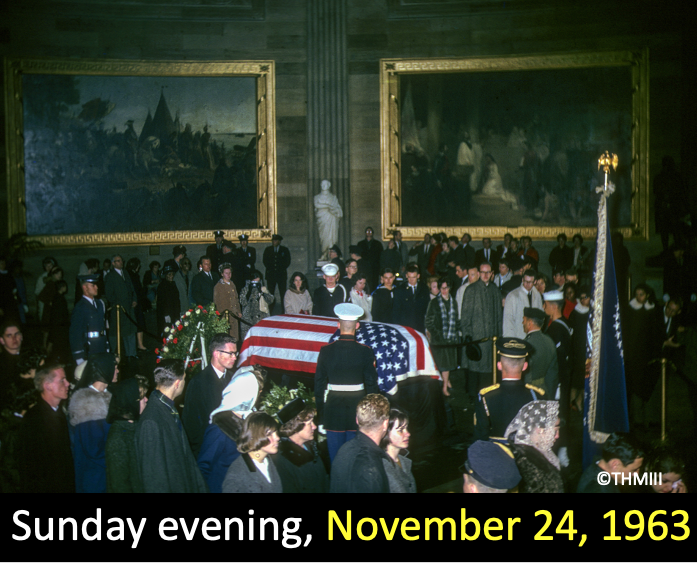
The crowd in the Rotunda was hushed and respectful. Etched in memory are the four military guards, one at each corner of the casket. They stood facing the inward, heads bowed, hands resting on a rile, still as stone. I wandered the halls but decided not to enter the House and Senate chambers. I struck up a conversation with an artist whose job was to capture the scene in oils. I had painted in oils when I was in junior high and knew how hard it was to do. She was very skillful. My only casualty was a drunken young man who had climbed the fence and had had a mishap: he fell on one of the spikes, which jabbed him in the anus.
© THMIII

Monday, November 25
The next day my duty station was graveside in Arlington National Cemetery. I stood near the grave with an unmatched view, but chose to let myself be pushed back as the crowd accumulated. There wasn’t much for me to do, so I just stood there, trying to look official and dignified. I took a lot of pictures.
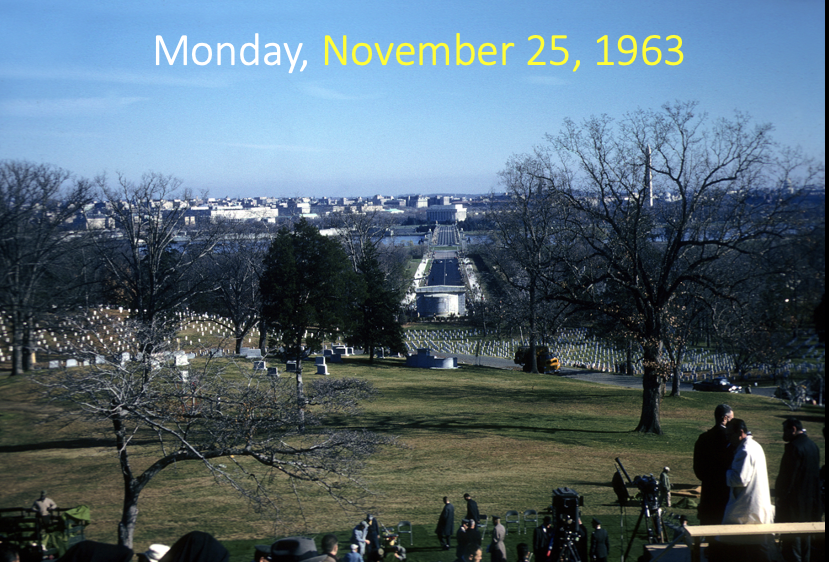
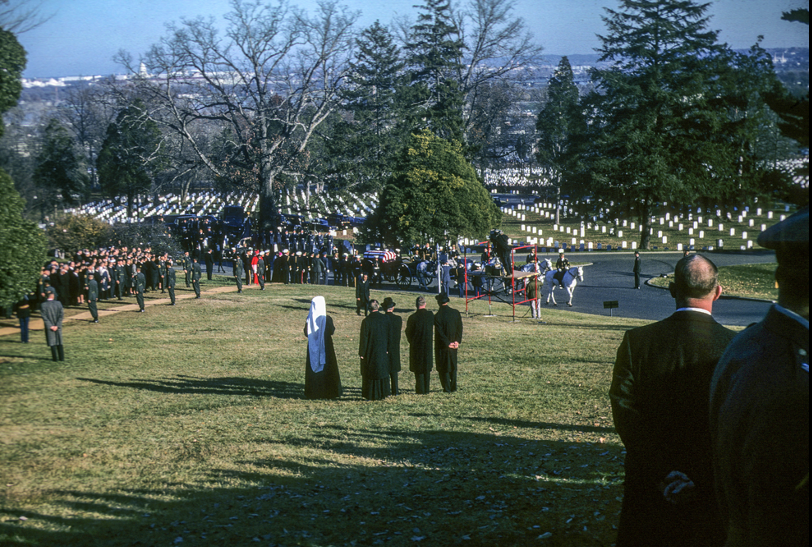
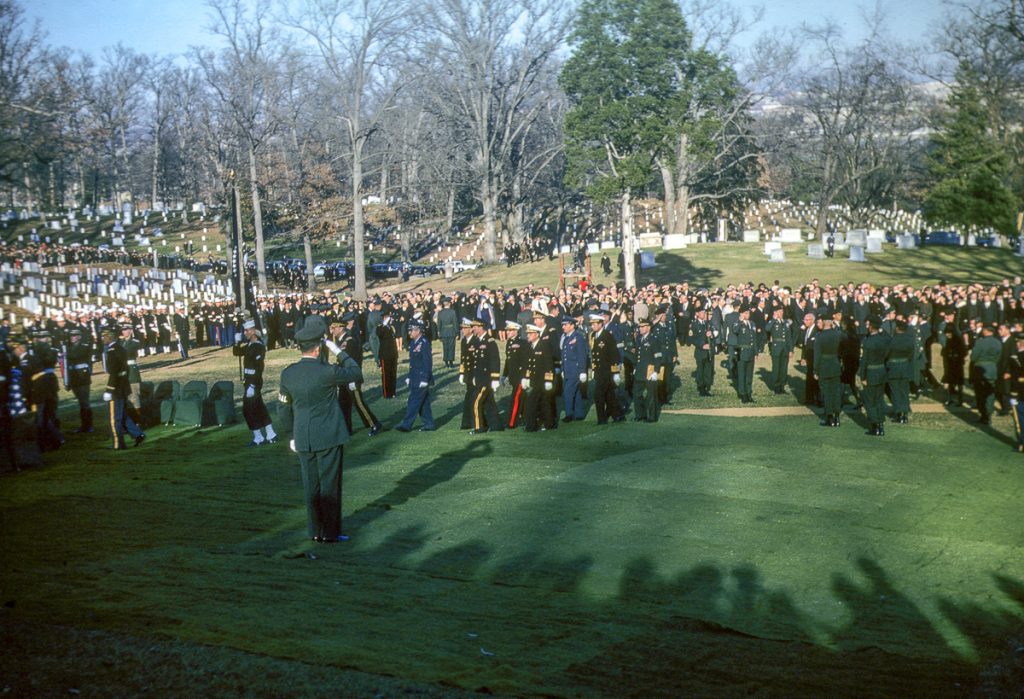
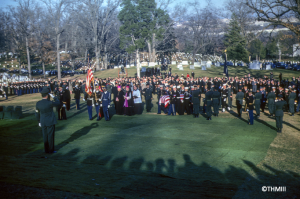
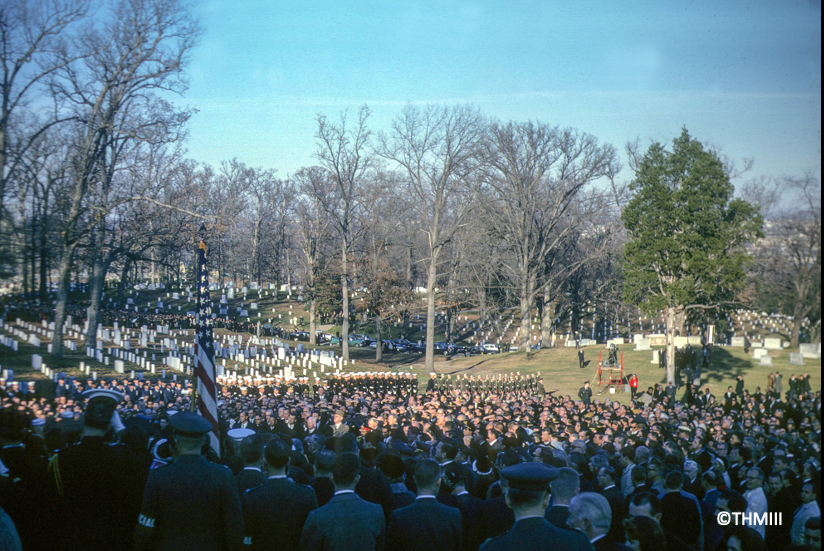
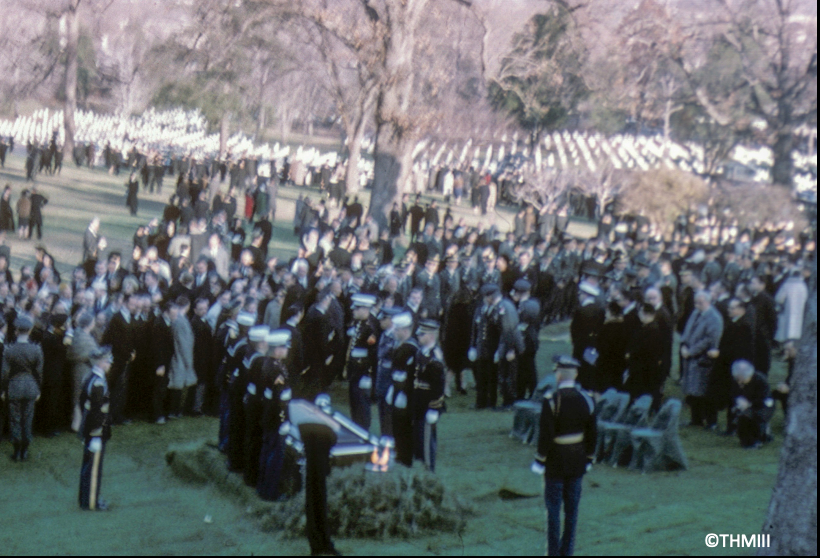
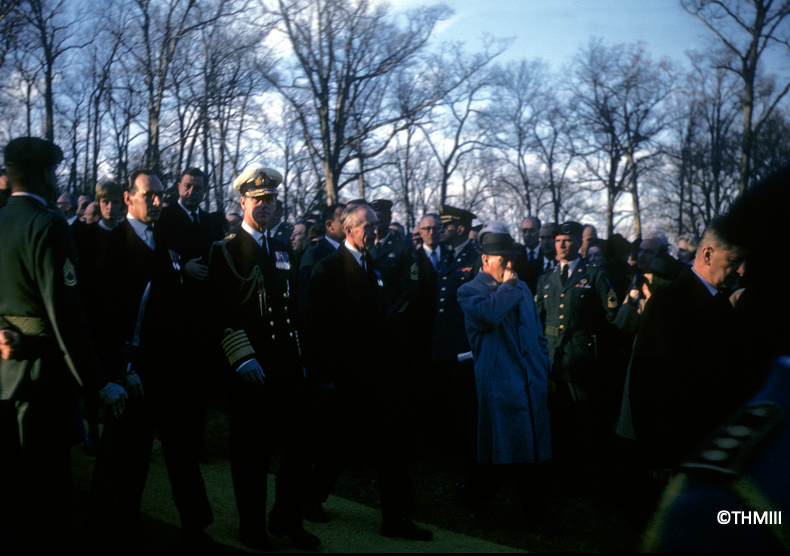
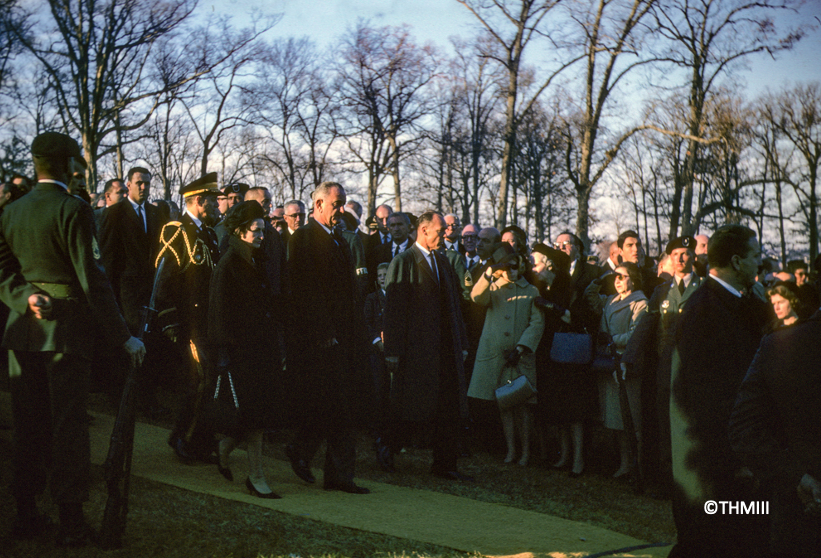
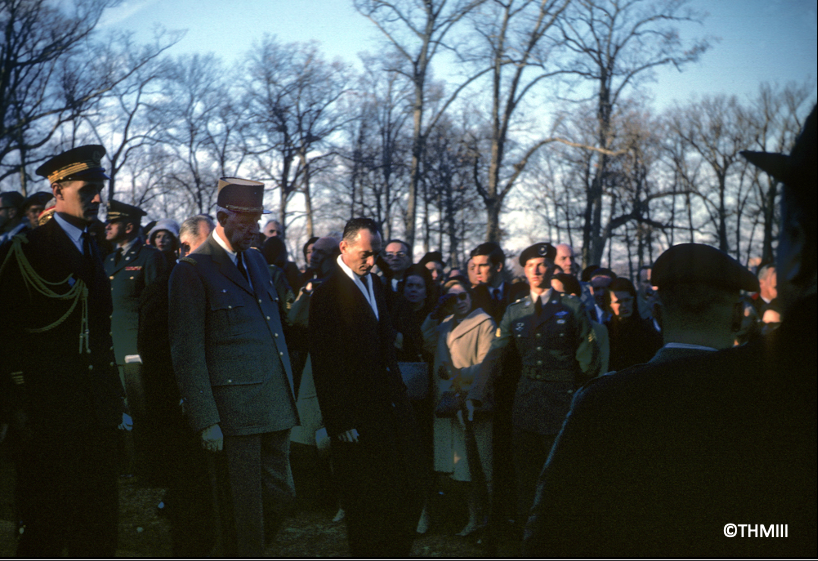
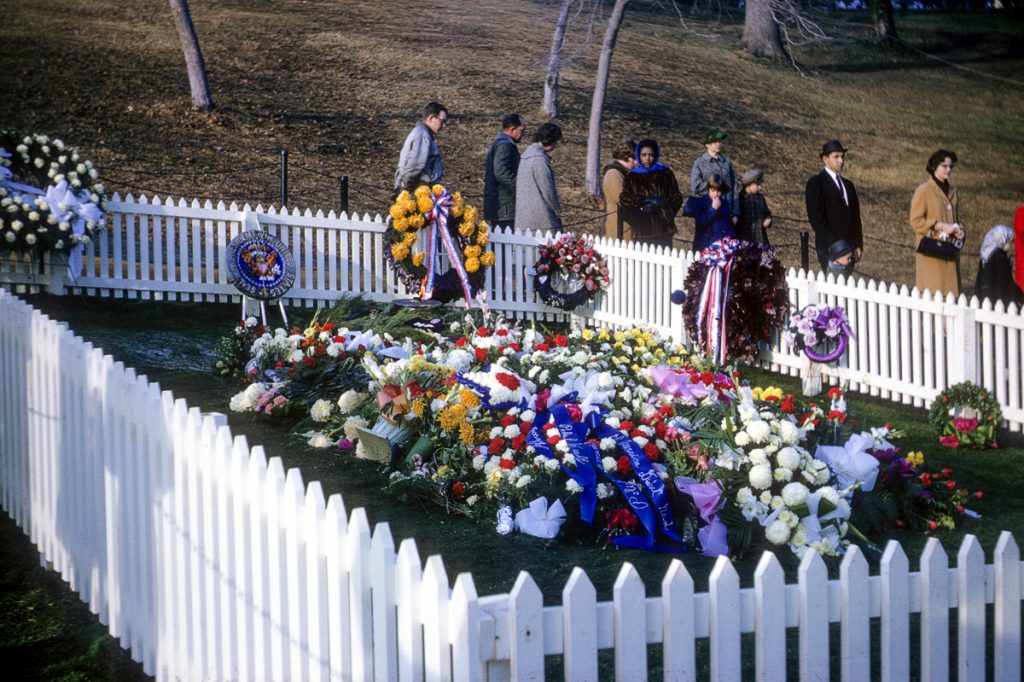
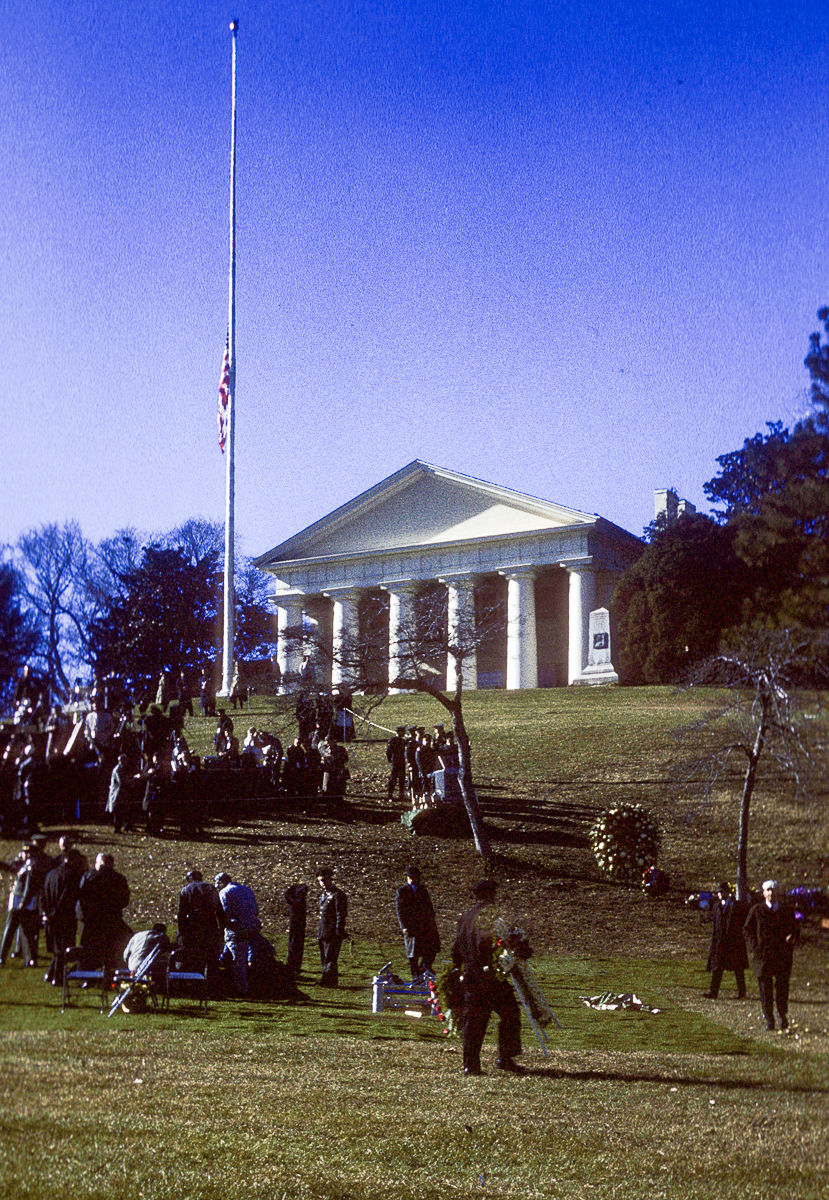
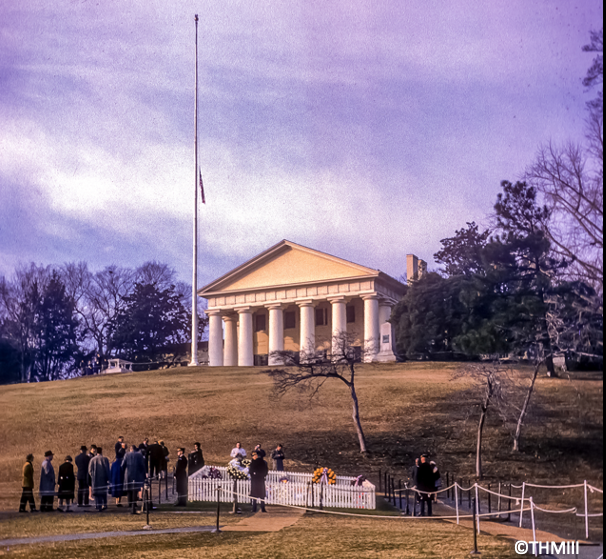
Echoing the strength of larger purpose, the sturdy columns of Arlington House rise above feeble graveside pickets. The Nation endures. Four days earlier he bestrode the world. He was 46 years old.